AI for Hotel Managers: Why Human-in-the-Loop Is Non-Negotiable
Hotels are high-trust businesses. Guests don’t just buy a room; they buy a promise—about comfort, safety, policies, tone, and reliability. That’s why AI in hospitality is fundamentally different from AI in many other industries. In a hotel context, a small mistake can become a public incident: a wrong policy answer, an inaccurate amenity claim, a tone-deaf reply to a negative review, or a misleading accessibility detail.
This is exactly where many teams misstep. They treat AI as something that should “run” automatically once it’s installed. But in hospitality, fully autonomous AI is not the goal. The goal is confident delegation: AI prepares actions, humans approve what matters, and the system earns autonomy gradually.
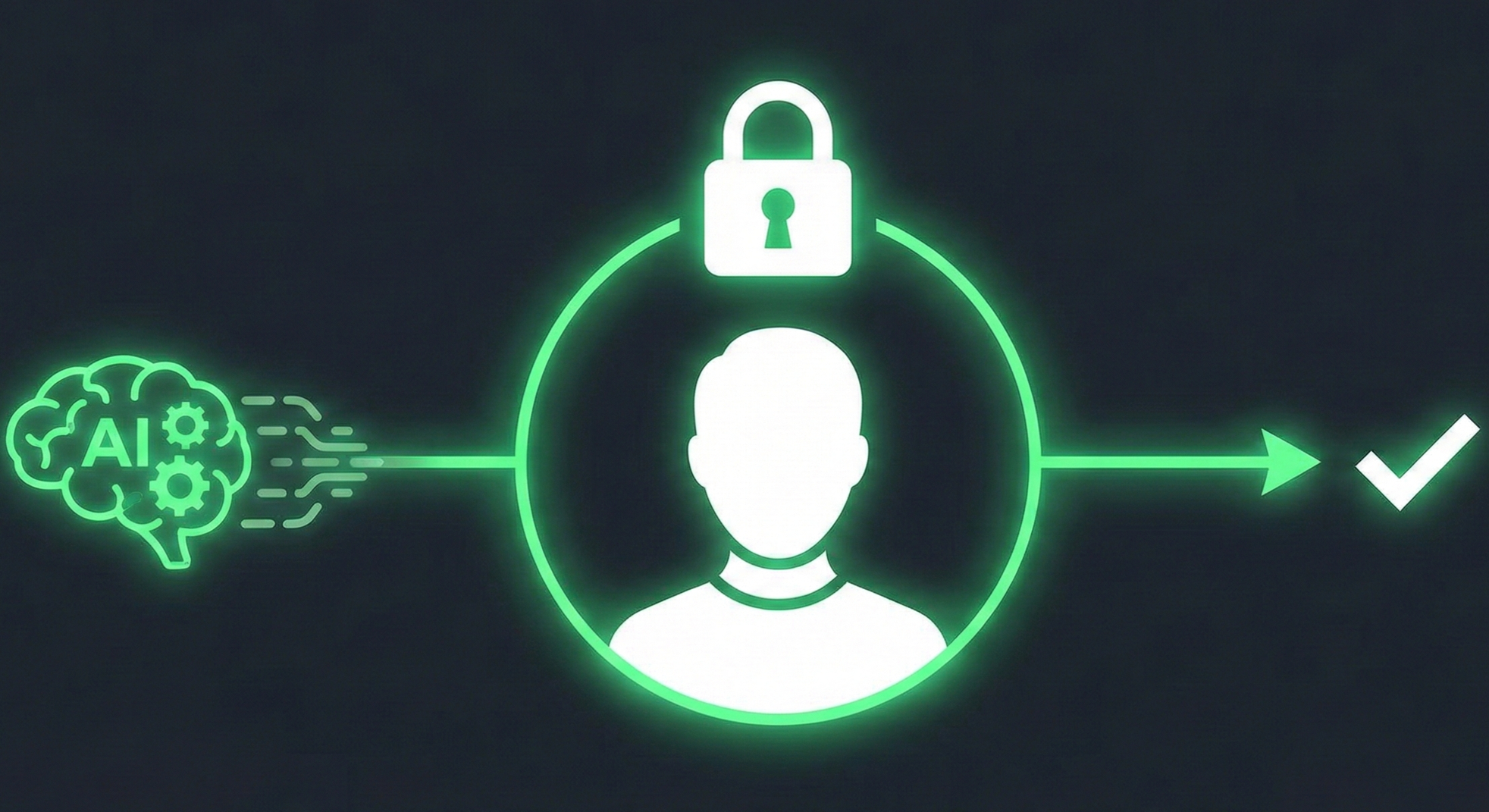
That design pattern is called human-in-the-loop (HITL). And for AI for hotel managers, it’s not optional—it’s the foundation that makes hotel AI systems safe, scalable, and trustworthy.
Human-in-the-Loop Isn’t a Compromise. It’s the Architecture.
When people hear “human-in-the-loop,” they sometimes imagine inefficiency—AI that still needs humans to click buttons. But that framing misses what HITL really does: it creates accountability, traceability, and risk control.
Modern risk frameworks treat AI as a socio-technical system: risk isn’t only in the model, but in how outputs are used, by whom, under what conditions, with what guardrails. NIST’s AI Risk Management Framework and its Generative AI Profile both emphasize governance and oversight practices that help organizations manage real-world risk across the AI lifecycle.
Hospitality has an unusually high “surface area” for reputational risk because so many interactions are public, emotional, and review-driven. HITL is how you keep speed and scale without sacrificing control.
Why Hotels Can’t Afford “Black-Box Autonomy”
In a hotel, AI may influence decisions or communications that directly affect guests and brand reputation:
A chatbot answering policy questions (“Is parking free?” “Is late checkout guaranteed?”)
A content generator publishing new claims about amenities or services
A review responder writing public messages under the hotel’s name
An “insights” system recommending operational changes based on feedback or sentiment
If those outputs are wrong, misleading, or poorly phrased, they don’t stay private. They become public artifacts that guests share, quote, and judge.
This is why a growing body of guidance—policy and practice—keeps circling back to human oversight. For example, Article 14 of the EU AI Act explicitly frames human oversight as a mechanism to prevent or minimize risks associated with high-risk AI systems.
You don’t need to classify hotel AI as “high-risk” to learn from this principle. The operational takeaway is simple: design systems so humans can monitor, intervene, and stop outputs when needed.
The Most Common Failure Mode: Automation That Sounds Efficient but Feels Inhuman
One of the fastest ways to damage a hotel’s reputation is to respond to a guest complaint with something generic, robotic, or tone-deaf. Hospitality isn’t just information; it’s empathy and context. When responses feel automated, guests interpret it as a lack of care.
Hospitality industry commentary has repeatedly pointed out that overly generic “automated” responses can frustrate guests and harm perception precisely because they fail to address the specific concern with authentic accountability.
Human-in-the-loop prevents this in a practical way: AI drafts quickly, but humans ensure the response is appropriate, accurate, and aligned with the situation.
What Human-in-the-Loop Looks Like in Hotel AI Systems
A strong HITL design does not mean “approve everything forever.” It means you build a risk-based decision ladder: AI can act autonomously on low-risk tasks, but must seek approval for medium- and high-risk tasks.
Here’s the mindset:
Low risk: formatting, summarizing, internal tagging, drafting options
Medium risk: public content drafts, review replies, policy answers with citations
High risk: safety, discrimination complaints, legal threats, refunds, accessibility claims, medical issues, security incidents
In practice, the workflow is usually a simple sequence:
AI prepares a draft action and attaches sources (Truth Layer)
AI labels risk (low/medium/high) and explains why
A human approves, edits, or escalates
The system logs what happened (for learning and accountability)
This is not bureaucracy. It’s a guardrail that makes delegation possible.
HITL Depends on Two Foundations: Truth and Traceability
Human oversight is only effective if the human can quickly see why the AI produced an output. That requires:
A Truth Layer: a governed source of verified hotel knowledge (policies, hours, amenities, exceptions).
Traceability: the ability to show the exact source behind any public claim.
Without truth and traceability, HITL turns into “humans guessing whether AI is right,” which defeats the purpose. With truth and traceability, HITL becomes fast, because approvals become lightweight: “Source looks correct, tone is good, publish.”
This is aligned with NIST’s approach: governance is not “one control,” it’s a system of controls—documentation, monitoring, and decision processes—that make risk manageable over time.
The Real Strategic Benefit: Graduated Autonomy
Hotels often fear that human approval will slow everything down. But the opposite is usually true—if you do it properly.
Human-in-the-loop enables a concept that matters far more than “automation”: graduated autonomy.
In week 1, AI drafts everything and humans approve most things.
In month 1, AI gains autonomy on low-risk tasks.
In quarter 1, AI learns preferred patterns and requires fewer edits.
Over time, autonomy grows only where it has earned trust.
This is how you scale AI responsibly. You do not start with autonomy; you arrive at autonomy through measured trust.
Why This Matters Specifically for Hotel Managers
Hotel managers don’t want a system that “does things.” They want a system that reduces cognitive load, prevents surprises, and protects the brand.
That’s why HITL is foundational to AI for hotel managers:
It keeps responsibility where it belongs (humans)
It keeps speed where it helps (AI drafting and triage)
It creates operational learning (feedback loops and logs)
It makes adoption sustainable (trust increases over time)
In other words, HITL is the bridge between “AI experimentation” and “AI operations.”
A Practical Governance Checklist (Short and Useful)
If you’re deploying AI in a hotel environment, ask:
Can the AI show sources for policy-related answers?
Can staff override, stop, or escalate outputs instantly?
Do you have risk categories that decide what requires approval?
Are actions logged (what was suggested, approved, edited, rejected)?
Do you have clear boundaries for high-risk topics?
If you can’t answer “yes” to most of these, you don’t yet have a scalable hotel AI system—you have a prototype.
The Bottom Line
Hospitality is not a domain where “black-box autonomy” is acceptable. It’s a domain where trust is the product.
That’s why human-in-the-loop is non-negotiable for AI in hospitality. It’s the architecture that enables hotels to move from AI tools to hotel AI systems—systems that prepare decisions, preserve brand integrity, and scale safely.
The goal is not autonomous AI.
The goal is confident delegation.
FAQ: Human-in-the-Loop AI in Hospitality
What does “human-in-the-loop” mean for hotel AI systems?
It means AI drafts or proposes actions, but hotel staff can review, approve, intervene, or stop outputs—especially for public-facing or high-risk tasks. It creates accountability and reduces reputational risk.
Why can’t hotels fully automate AI responses and content?
Because hospitality is high-trust and high-context. Wrong policy answers, inaccurate claims, or tone-deaf replies can cause outsized reputational damage and guest frustration.
Is human oversight required by regulation?
In regulated contexts, the EU AI Act explicitly includes human oversight requirements for high-risk AI systems, aiming to minimize risks. Even if a hotel use case isn’t classified as “high risk,” the oversight principle is a strong design best practice.
Insightful Resources
NIST AI Risk Management Framework (AI RMF 1.0). (NIST)
NIST Generative AI Profile (companion to AI RMF, July 2024). (NIST Publications)
EU AI Act, Article 14 on Human Oversight (practical principle). (Artificial Intelligence Act)
Hospitality perspective on generic/automated review responses and need for human intervention. (Hospitality Net)